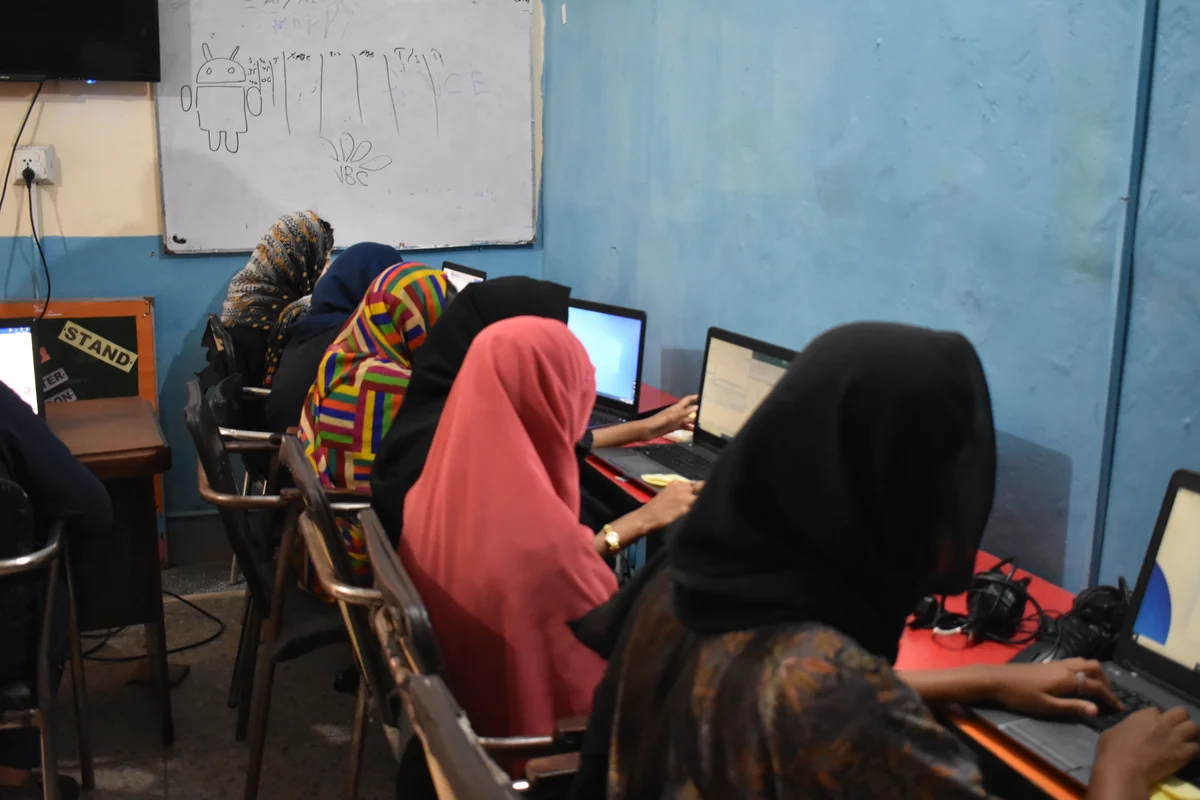
Education: "Bachoun aur Naujawanon ka Mustaqbil."
Today, over 26 million children in Pakistan remain out of school, while millions more endure substandard education shaped by inequality and outdated systems. Awaam Pakistan is committed to ensuring that every child has access to quality, equitable, and future-ready learning—regardless of class or region. We envision education as a powerful equalizer and a catalyst for national progress, fostering literacy, creativity, civic responsibility, and opportunity. Through investments in teachers, technology, and modern curricula, alongside family support and flexible learning pathways, Awaam Pakistan strives to ensure that no child is left behind. From early education to higher studies and technical training, our goal is clear: to empower Pakistan's youth as skilled, confident citizens ready to build a prosperous and inclusive nation.
1. No Child Left Behind
In Pakistan, economic hardship keeps about 44% of children aged 5–16 out of school, with poverty as the leading cause. The PSLM survey shows that nearly 22% of children from the poorest households have never attended school. Awaam Pakistan will reintegrate out-of-school children through awareness and targeted family support programs covering essentials like food, clothing, and transport—preventing child labor and promoting learning. In partnership with provincial education departments, we will introduce conditional cash transfers and community-based schooling, modeled on successful regional programs, to achieve universal primary enrollment.
2. Quality and Accountability in School Education
Awaam Pakistan will revitalize education through skilled teachers, modern curricula, and local accountability. With a 44:1 student–teacher ratio and only 39% trained educators, instruction remains weak. We will create National Teacher Training Institutes and enforce licensing tied to performance. Reforms will emphasize critical thinking, STEM, and digital literacy aligned with job market needs. Elected School Boards will ensure transparency, while universal high-speed internet in public schools will bridge the rural–urban divide and advance educational excellence.
3. Equitable Access and Choice for Parents
Over 46.5% of Pakistani students attend private schools, vital for educational continuity amid public sector gaps. Yet rising costs and uneven quality exclude many low-income families. Awaam Pakistan will launch a School Voucher Program to help low-income households send children to accredited private or non-profit schools. This initiative will expand choice, foster competition, and strengthen accountability—ensuring quality education becomes a right, not a privilege, for every Pakistani child.
4. Modern Learning and Student Well-being
Many Pakistani schools lack basic facilities, with 36% without clean drinking water and 42% without functional toilets, according to ASER, undermining education's social and environmental quality. Awaam Pakistan will promote nationwide educational standards through culture-based programs and a Standardized National Testing system. A School Meals Programme, modeled on global best practices, will boost nutrition and attendance in rural and low-income areas. Mandatory sports, arts, and extracurriculars will cultivate teamwork, civic responsibility, and life skills, nurturing healthy, well-rounded, and socially conscious citizens.
5. Higher Education and Research Excellence
Government spending on higher education in Pakistan has declined to just 1.9% of total expenditure, far below UNESCO's recommended 6% benchmark. Awaam Pakistan will strengthen universities through greater autonomy, accountability, and funding. We will promote high-impact research, faculty development, and stronger industry linkages while fostering innovation, entrepreneurship, and global collaboration. By prioritizing sustainable investment in higher education, we aim to build world-class universities and affirm that educating Pakistan's youth is the surest path to national progress.
6. Technical and Vocational Skills Development
With 64% of Pakistan's population under 30, the nation's youth are its greatest asset—yet only 12% receive technical or vocational training, widening the gap between education and employment. Awaam Pakistan will bridge this divide by expanding Technical and Vocational Education and Training (TVET) institutions, modernizing curricula with industry input, and promoting apprenticeships in high-demand fields like renewable energy, IT, and manufacturing. Our goal is to equip youth as job creators, powering inclusive and sustainable national growth.
Ready to Make a Difference?
Join thousands of Pakistanis working towards a better future.
Get Involved